
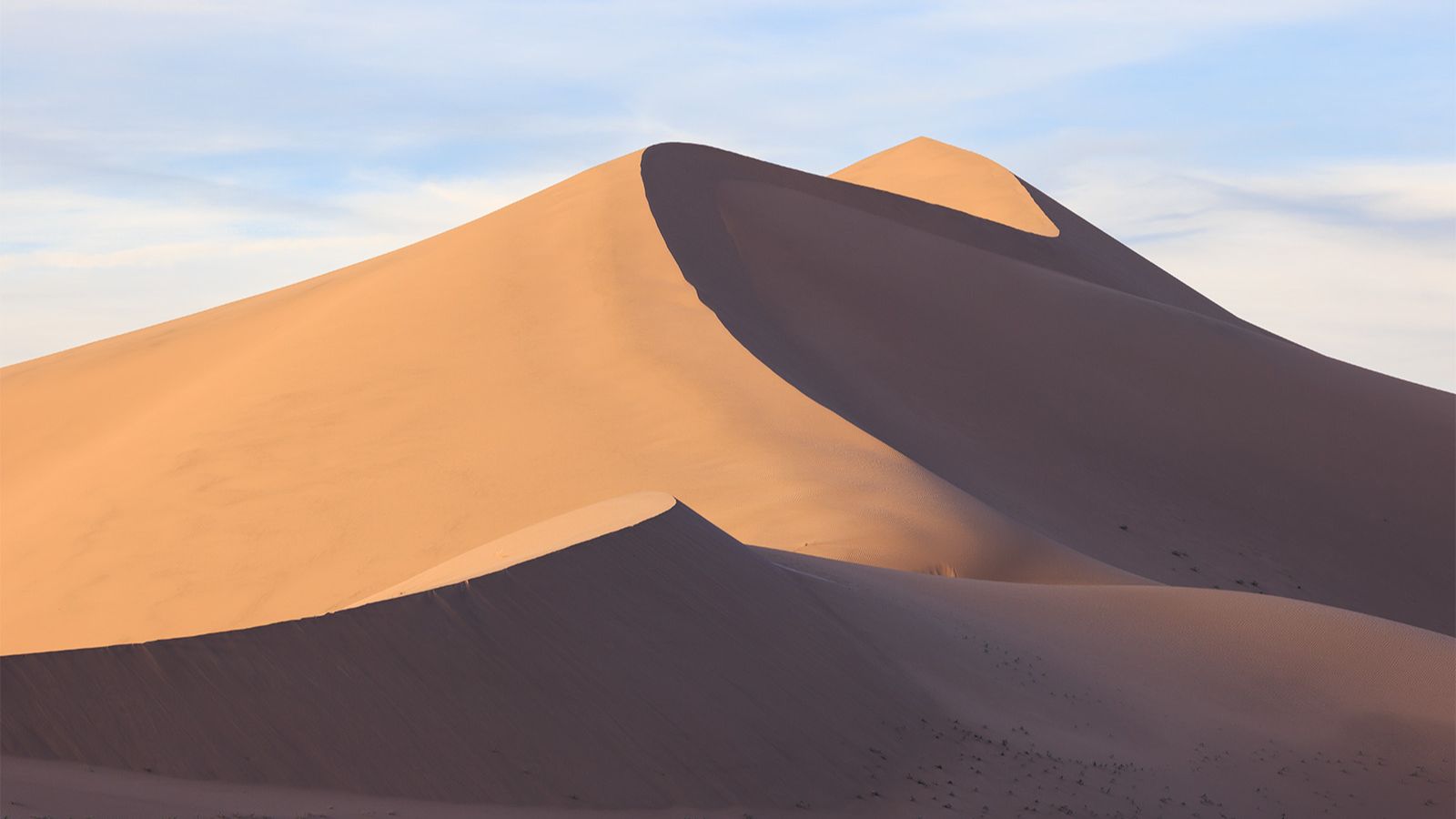
A Journey Across Death Valley- From Dunes to Dunes Workshop
Mar 17, 2026About five or six months ago I pitched Nic on this idea of running a Death Valley workshop that visited all the major dune fields in Death Valley National Park. There are a total of five that I am aware of, but as I did more planning I realized two of them probably wouldn't make for a good photography workshop for a variety of reasons. For the Saline Dunes, it would require a huge amount of back tracking or an entire day of just driving through rough roads. For Panamint Dunes, the challenge actually was the 8 plus miles of hiking across open desert. Not the end of the world for me, but not exactly what most workshop guests sign up for, especially on a driving adventure billed at getting you close without the huge hikes.
That left three dune field to explore: Eureka Dunes, Mesquite Dunes, and Ibex Dunes. With a tag along of the Race Tracks, this workshop turned into an adventure that resulted in a top to bottom adventure of the entire park. Kind of special actually, as most workshops never get to see all of the park in a single go.
Day 1- Eureka!
Every workshop to Death Valley begins with food. Food makes everyone happy. On this day, meals were provided by Alabama Hills Cafe and Bakery. Tasty food, and surprisingly fun drinks set an upbeat mood as we went over the important stuff like safety, bathrooms, and expectations.
Smiles all around!
After food, we loaded up jeeps and headed off into the desert. The drive into Eureka is mostly paved. The final few miles are on a well maintained dirt road with lots of rocks specifically designed to kill car tires. We air down for this very reason.
On our last visit in December, there had been a ephemeral lake that had shown up on the north side of the dune field. Now that 2 months had passed, my hunch was that the lake had dried up. When we arrived we were gifted with some of the best conditions you could ask for as a photographer.
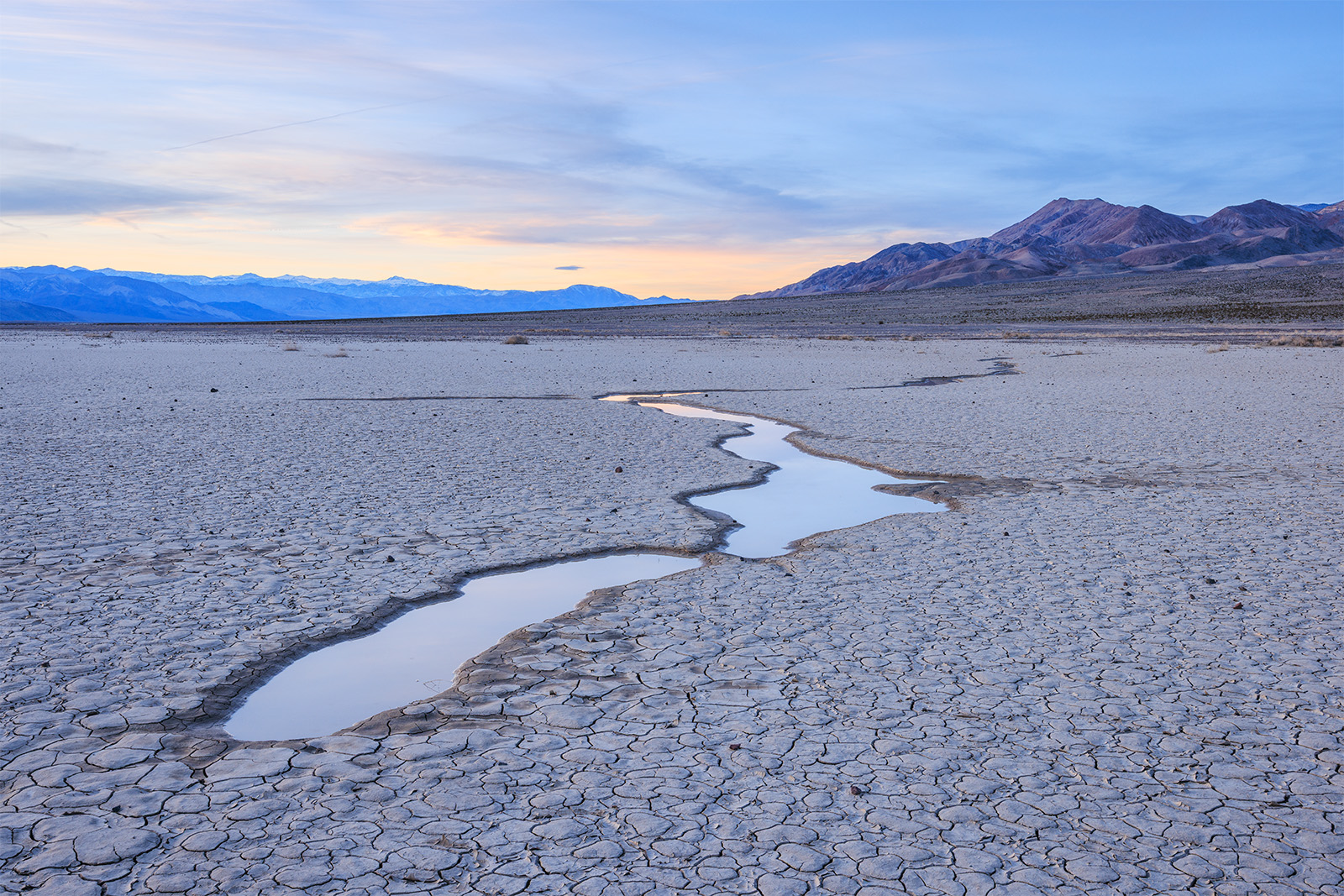
Instead of a lake sitting at the edge of Eureka dunes, we had a mud playa with hyper saline water veins running across it. This meant leading lines, reflections, mud cracks, and epic sand dunes. Compositions were essentially endless. Then mother nature threw one more gift, an angel shaped water pattern.
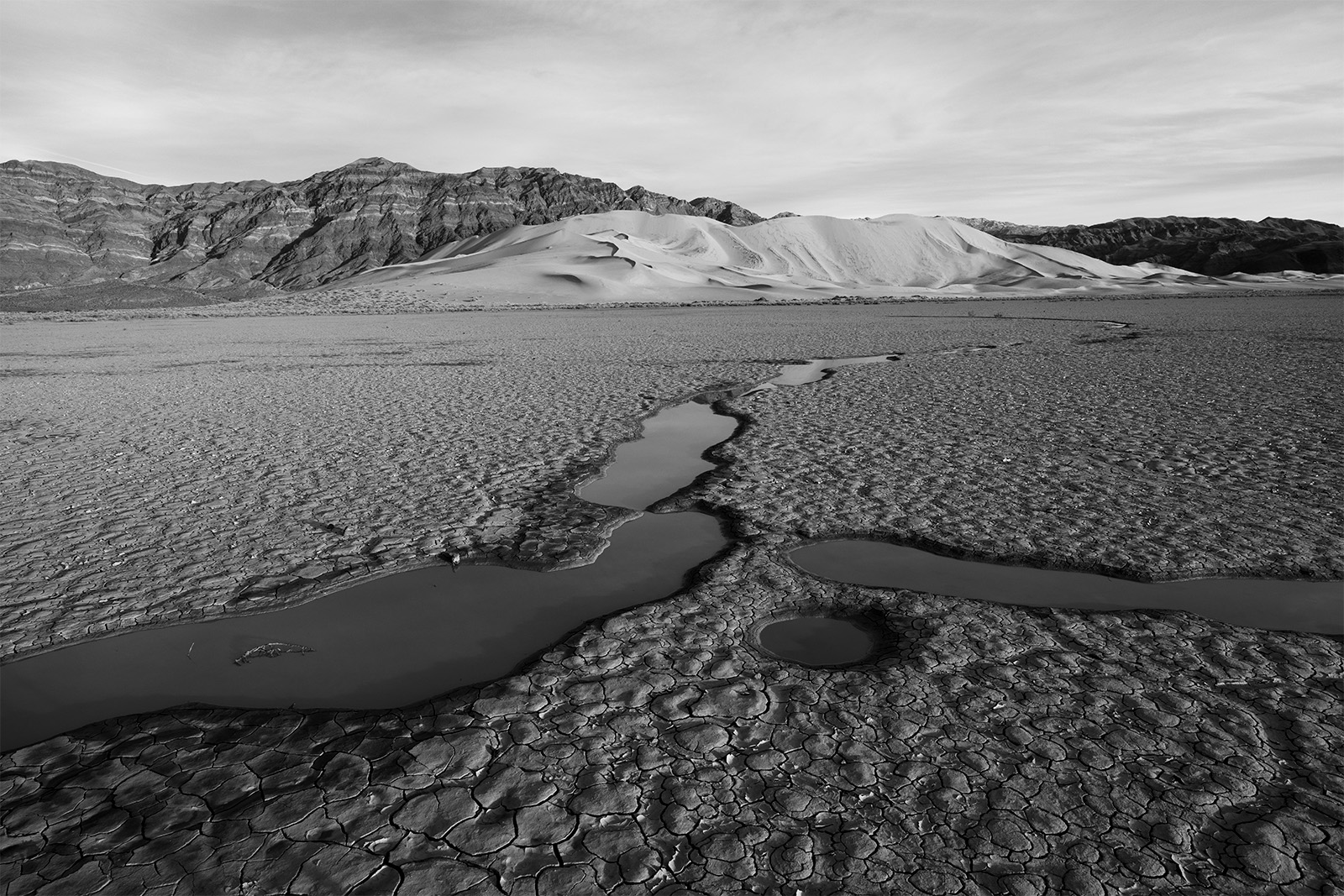
So for the evening Murray and I spoke with guests about composition, leading lines and working with patterns and compositional balance. My inner biologist did come out while we were there and I began to point out the little things still swimming around in the pools if you paid attention. Probably brine shrimp as they are pretty ubiquitous across much of the great basin in ephemeral saline lakes.
Day 2- Dunes to the Racetracks
Sometimes mother nature just shines upon your workshop and on day two she sure did shine. Clouds, clouds and more clouds had began rolling in sometime in the night and we were gifted exceptional conditions. In order to take advantage of this, Murray and I lead the guests into the heart of the dune field where we could have nearly 360 degrees of compositions. Soon after arriving and giving a bit of a speech about using leading lines and curves the light showed up and just kept delivering!

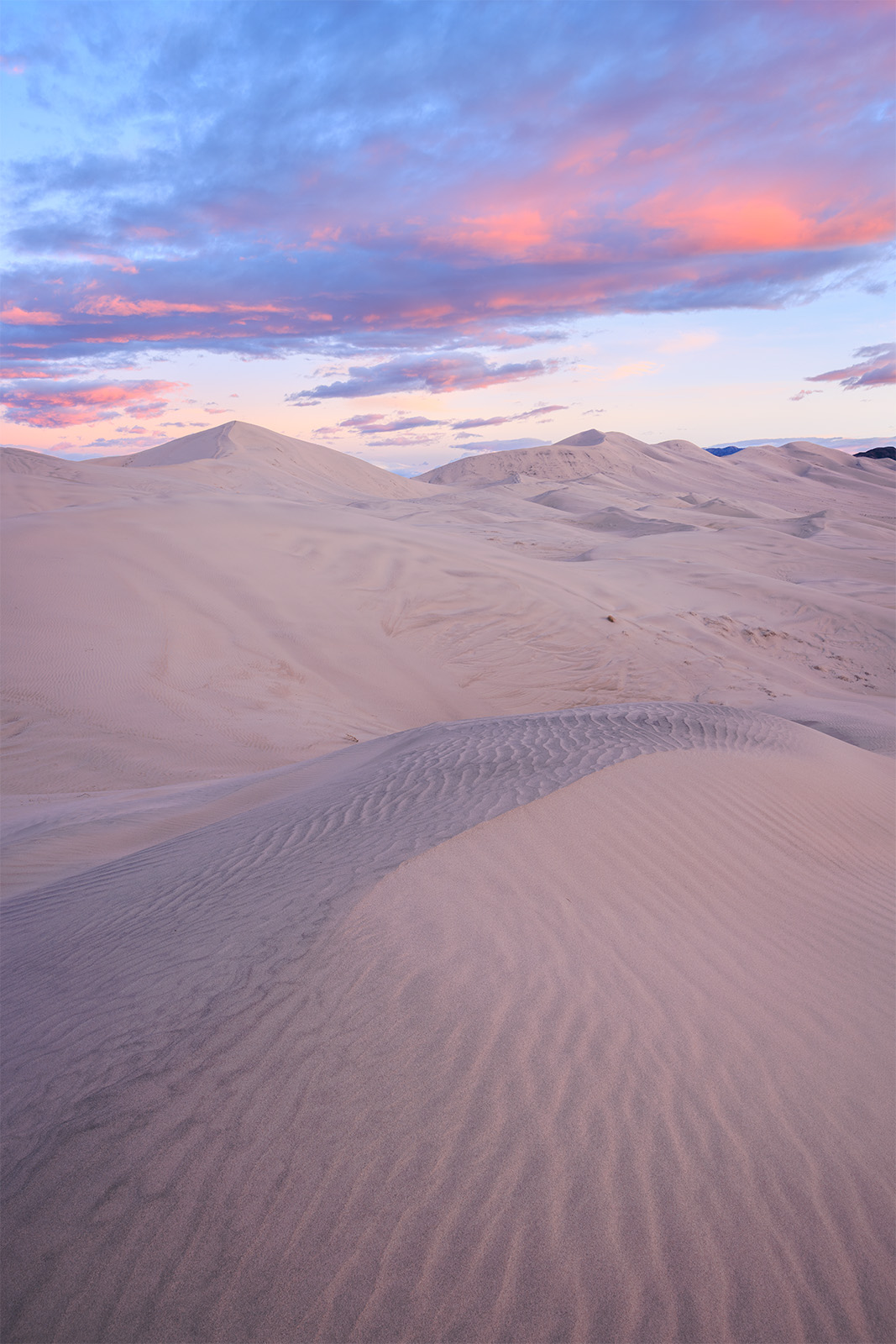
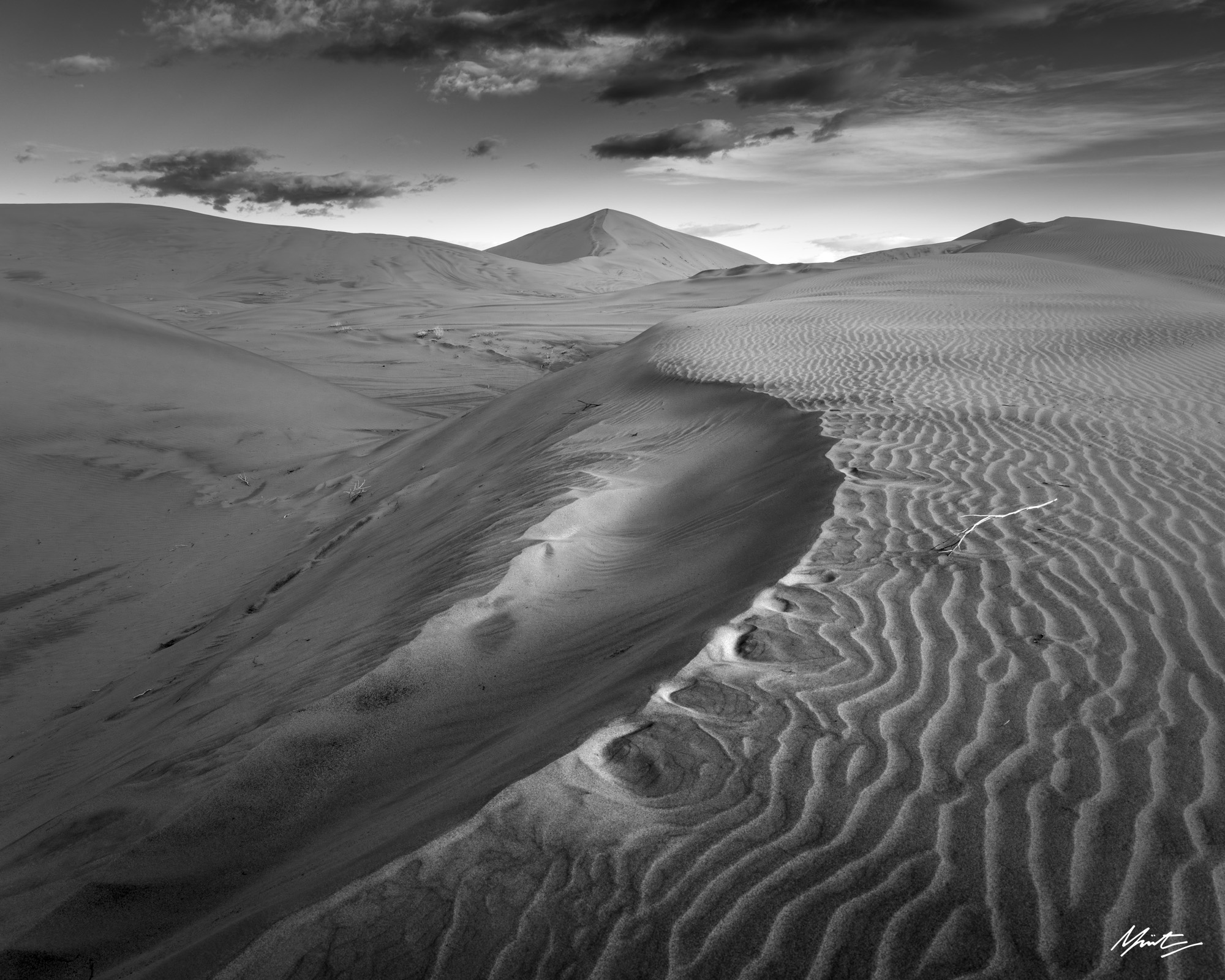
For the next two hours our little group wandered across the dune fields photographing the shifting sands as the light played out across the landscape. We eventually worked our way to the top of one of the larger dunes and were able to photograph the final moments of good light for the morning. Overall a really special experience.
With sand filled shoes, we packed camp and began the long journey to the Racetracks.
Once again in December, we had the unfortunate situation where the Racetracks were actually covered with water. But mother nature once again gifted us with conditions any photographer would be jealous of. The lake bed had dried up, officially leaving about 100 different stones with new tracks behind them. Not only did we have a perfectly flat, dry, untouched playa to work with, we also had clouds. Stunning, shifting swirling, clouds that just kept on giving.
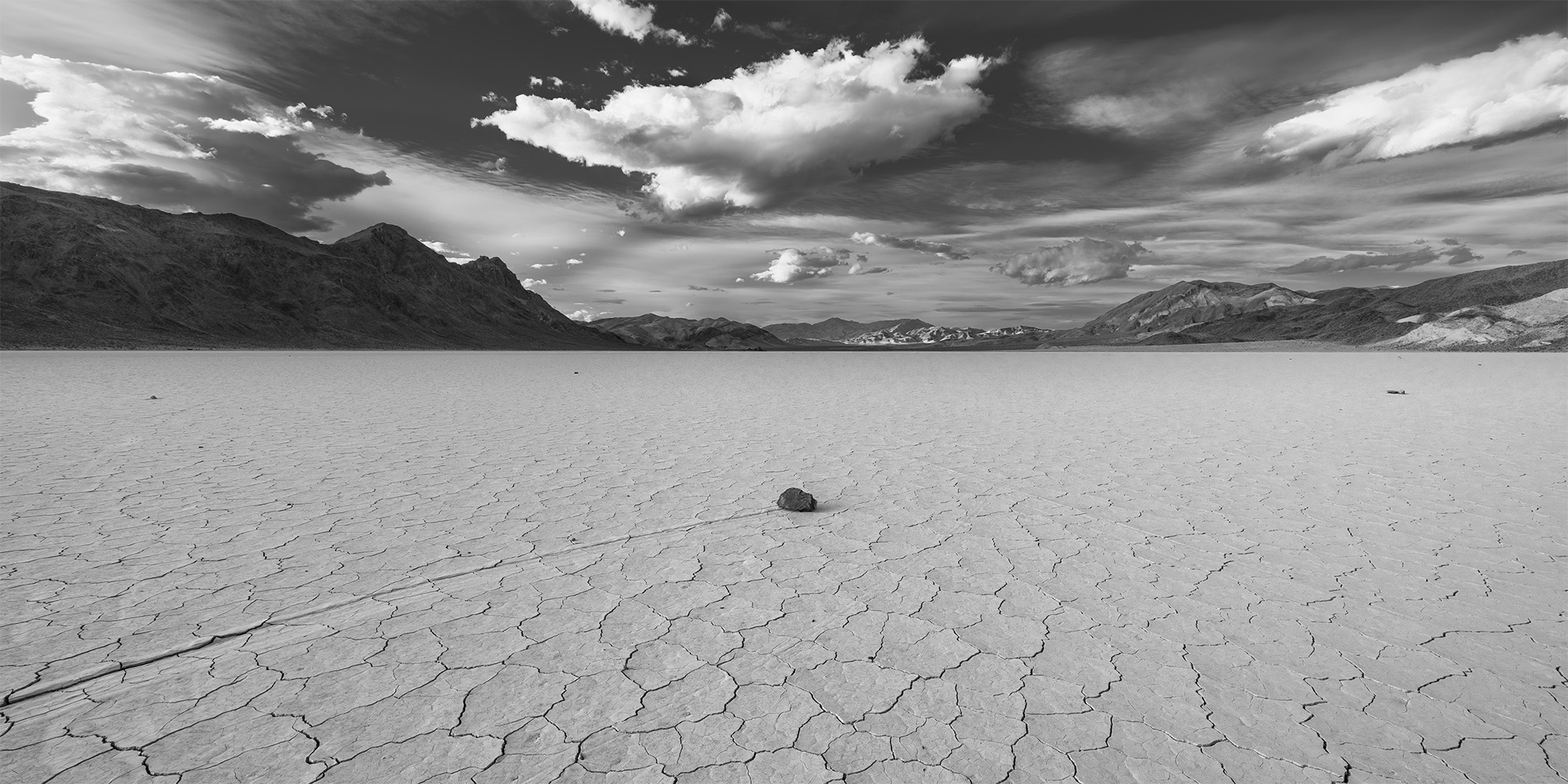
The fun part about the Racetracks, is that it provides a place to practice near far compositions and leading lines. So we wandered back and forth with guests talking about balancing the image so that your leading lines carried you into the image while balancing the appearance so that one side doesn't have more visual weight on it than the other side. The night went just about as perfect as you could get... except the other campers at camp who happened to think that playing loud rock music into the night is an appropriate way to be neighbors while out camping. I eventually had to tell them to turn it down.
Day 3- Off To Mesquite
Mesquite dunes are the lowest sand dunes I think in the world (sitting about 100 feet below sea level) and are the most popular dune field for people to visit in Death Valley. Overall a super cool place to photograph, as long as you can get away from the crowds.
After enjoying a sunrise at the Racetracks we packed camp and made the 50 mile journey into the heart of the park. On the way, I realized I might be running on fumes for my jeep carrying the trailer. Mesquite dunes is down hill from nearly every point in the country, so I let gravity carry us to the gas station. (We carry 8 gallons of fuel on us for this reason. I wasn't really worried, just didn't want to have to pull off my fuel from my vehicle)
After setting up camp we ventured out into the dunes for a night of wonder amongst the sea of shifting sands. One of the lessons you have to really embody with photographing sand dunes, is you only get one chance at somethings especially with sand patterns. Once you step into a composition, you can't undo that step. So as a group we really emphasized inch worming forward, one bit at a time so that we didn't ruin potential compositions.
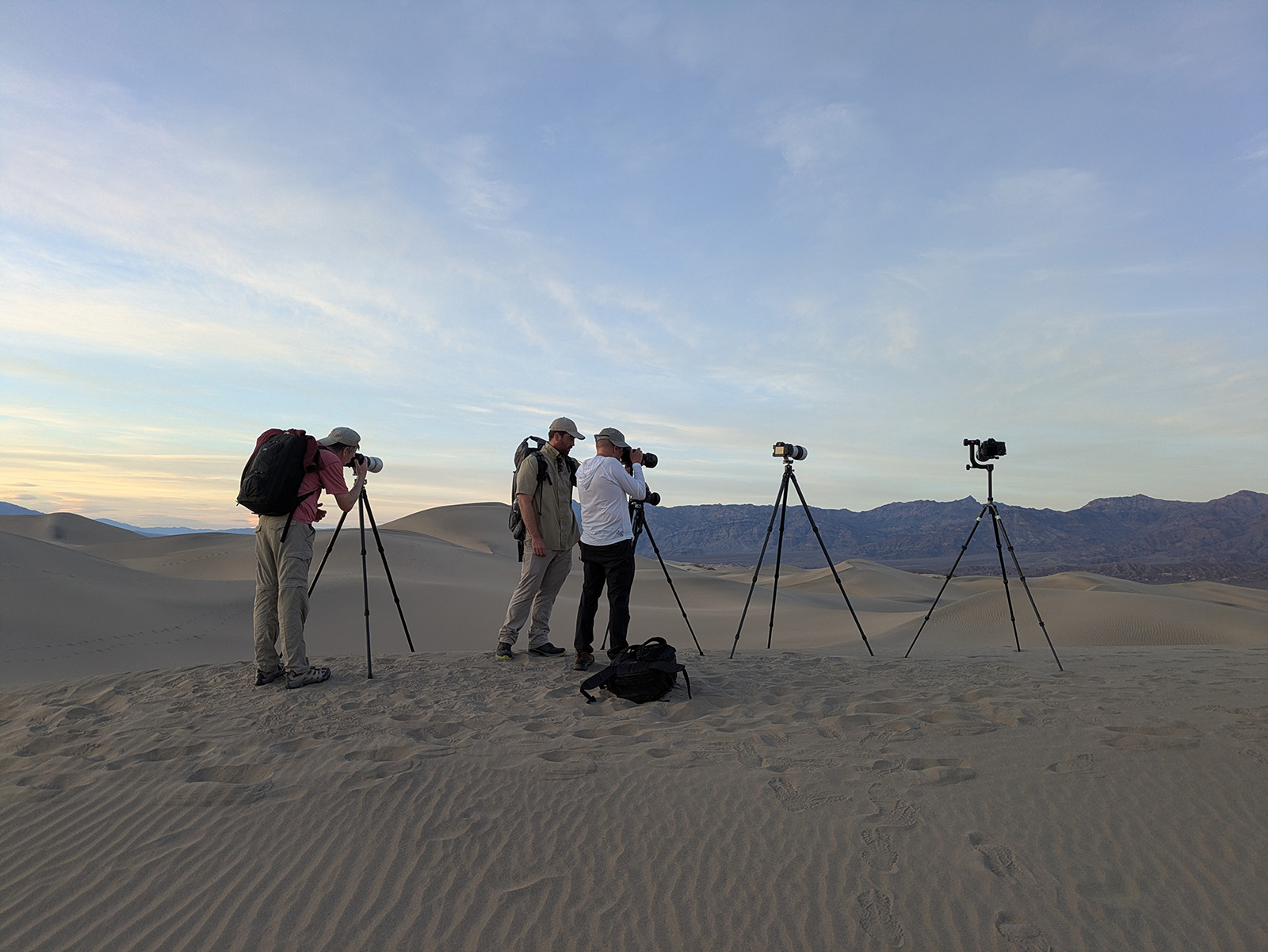
Further into the dunes we went until we hit a point that had many great compositions in all directions as the light was fading so here we stayed. Shot after shot people rotated into a variety of directions and enjoyed the shifting light across the dunes.
It is fun shooting with Murray. Though technically American, he grew up over seas and did much of his photographic upbringing in the woods of Scotland. This results in a different approach form American photographers. Where I am into more bombastic colorful scenes, Murray focuses on quieter images, often telephoto. For example Murray loves scenes like the below image. Close, intimate, softer colors.
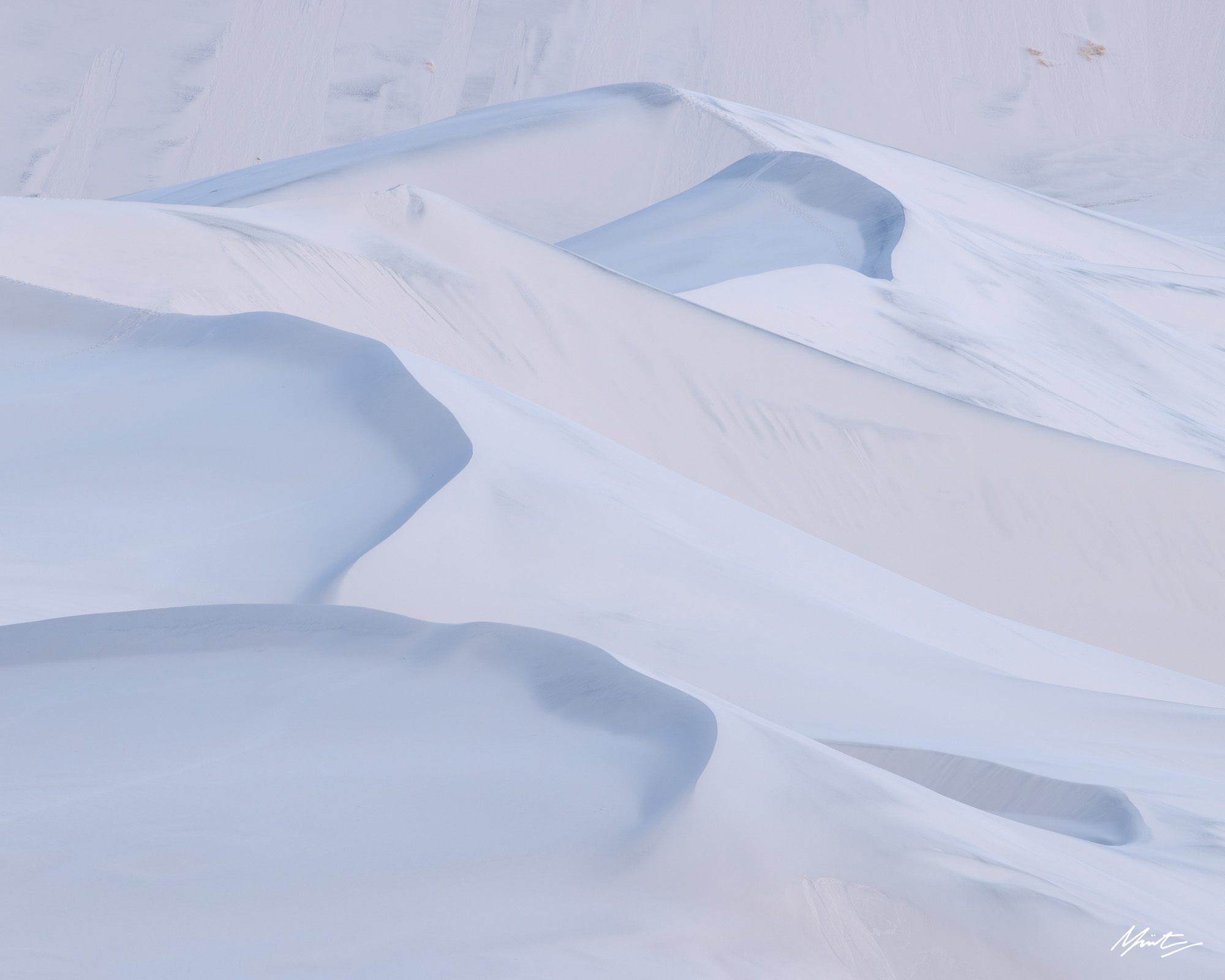
I on the other hand fell in love with these scene. Bold and a bit arrogant. Both have merit and represent different ways of perceiving the world. I really liked that dynamic that came with working with Murray. He almost always had the 100-500mm lens on while I often stopped at 70-200. It results a tug and pull in teaching styles, different philosophies of seeing the world. Photography isn't about one size fits all, its about variety and learning to be and do things different.
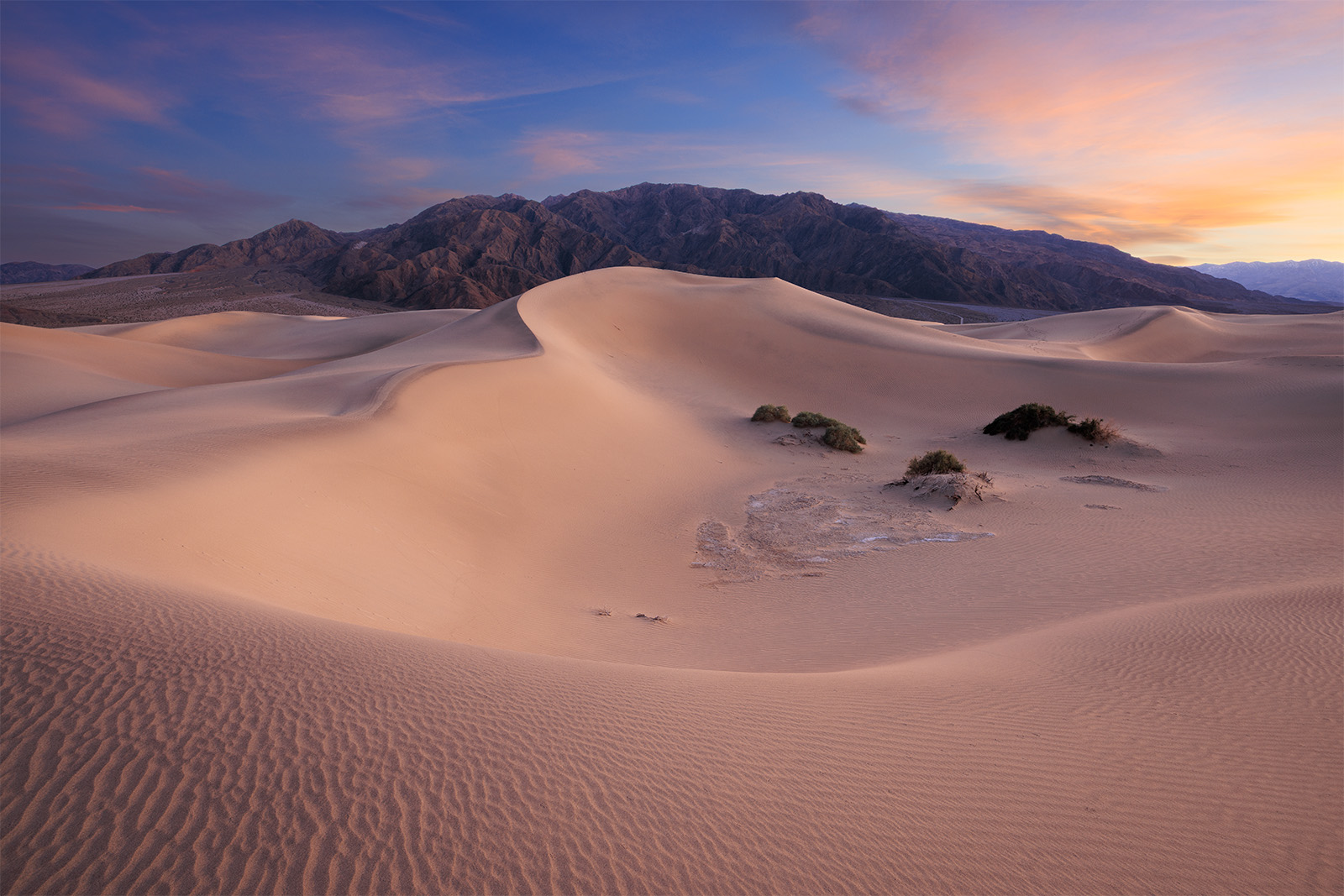
Day 4- The Super Bloom
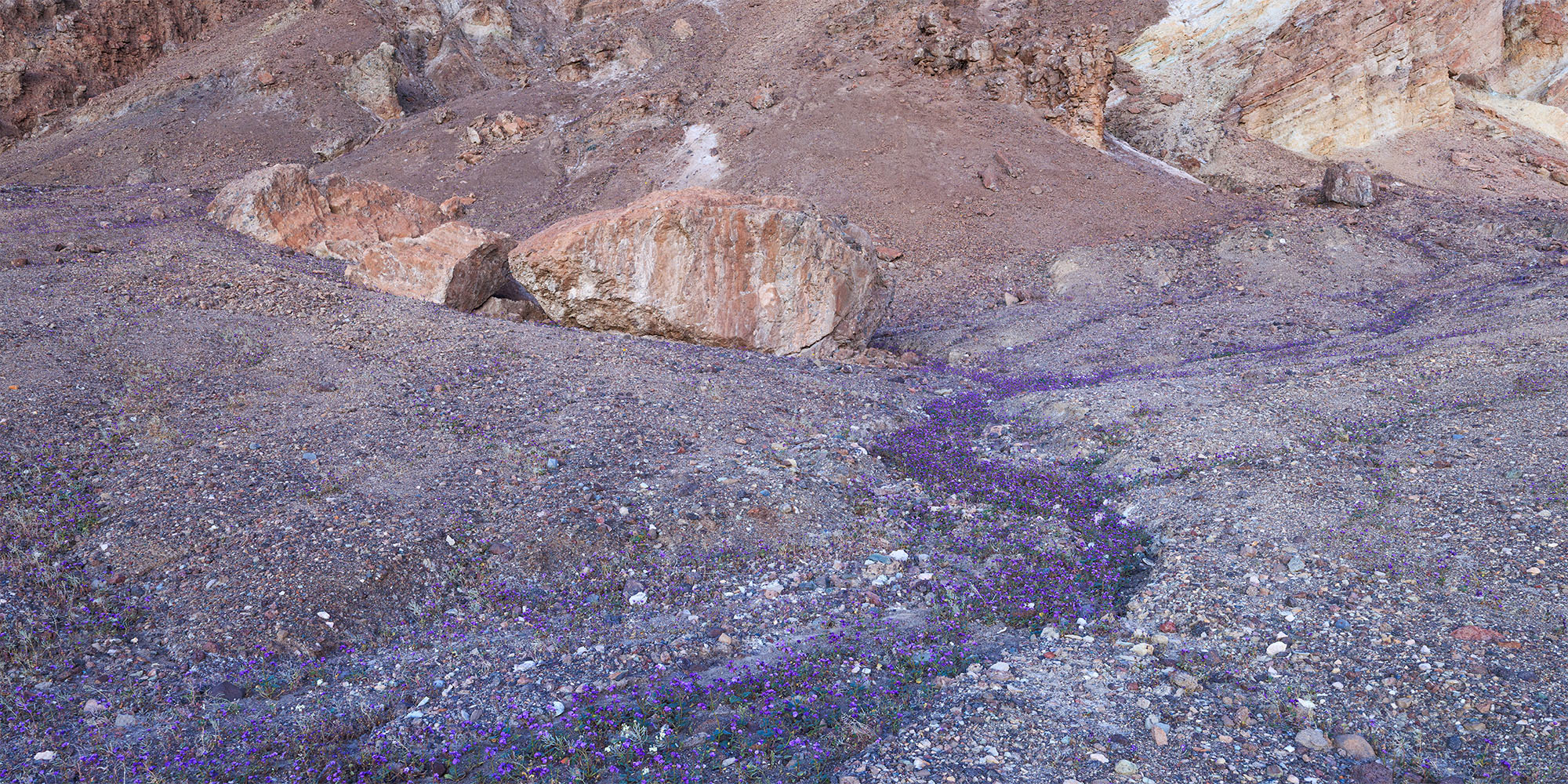
You do not really plan workshops around super blooms or flowers usually unless they show up consistently like they do in the mountains. Death Valley has a track record of having a super bloom about once every 10 years, so when the news began to break that we were driving into a super bloom we got pretty excited. Unfortunately we were on the early side of it, so the only places that were really blooming were the very base of the valleys, but that didn't stop us.
For sunrise on day four, we focused on wildflowers. This turned out to be quite challenging as the landscape was predominately covered with flowers that were either little purple flowers, or these tall stalky yellow flowers. From the right angle they looked stunning, from the wrong angle, all the images looked chaotic and messy. So we spent a huge amount of time just trying to get the compositions to work out correctly. In the end I turned to the telephoto, while some of our guests shifted towards ultra wide so that they could really exaggerate one flower or two.
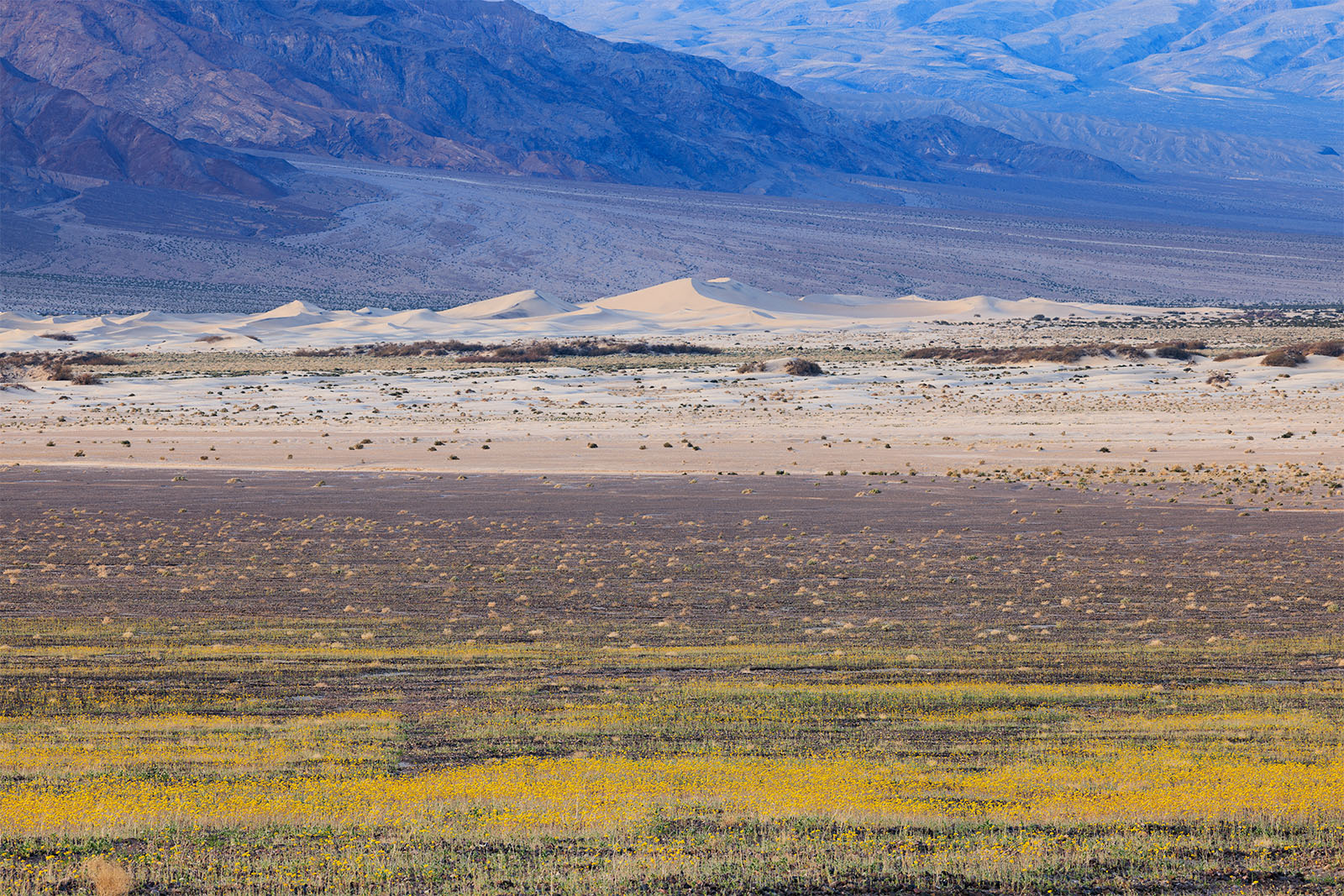
After our sunrise shoot, we packed camp and headed south to Ibex. Along the way we were treated with what seemed like a never ending shifting landscape of flowers across the lower half of the park. We saw alluvial fans covered with wildflowers, rivers of purple snaking out of the canyons, carpets of white flowers across sandy flats. Just stunning.
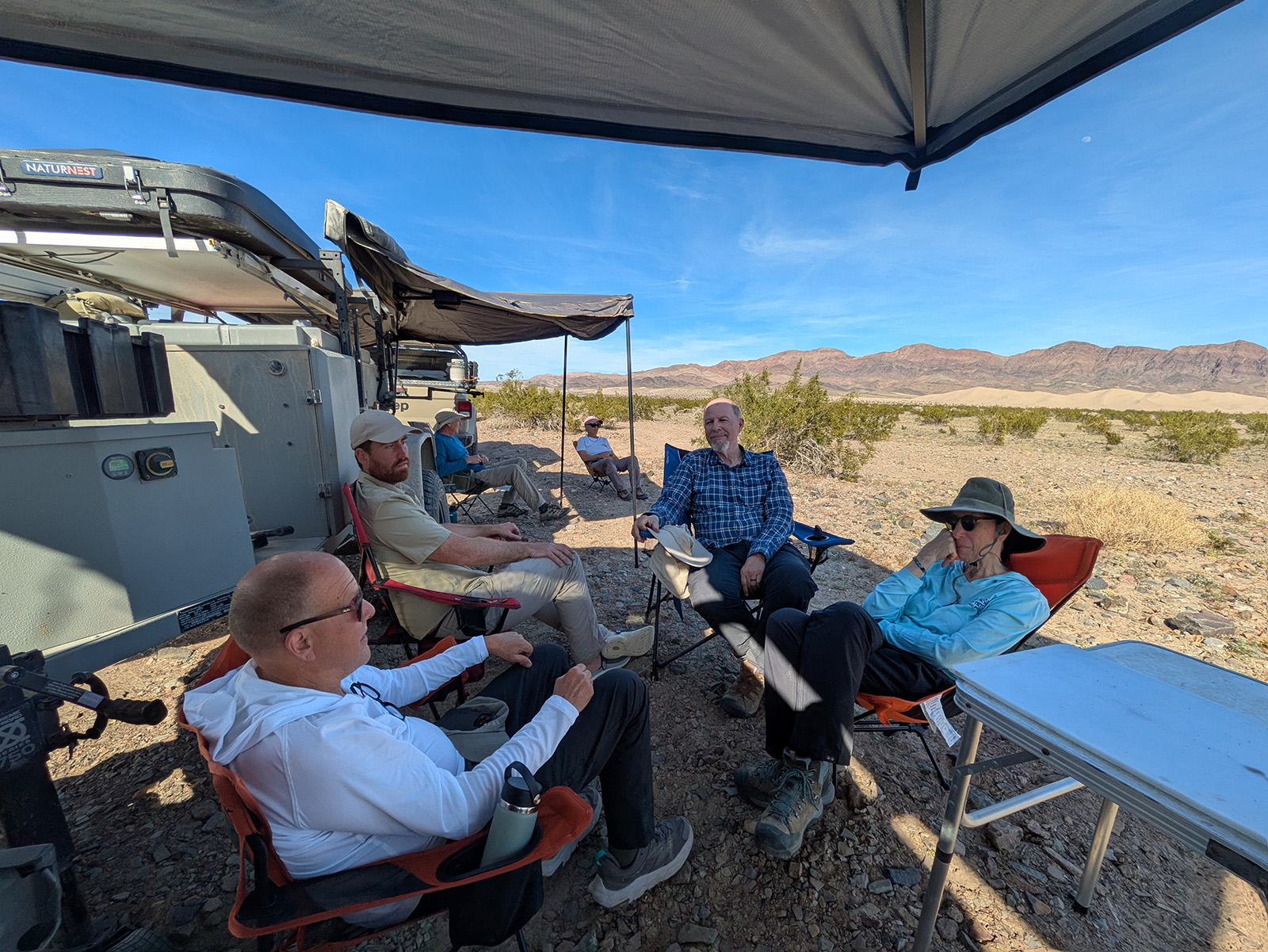
Guests hanging out outside of Ibex waiting for sunset to arrive.
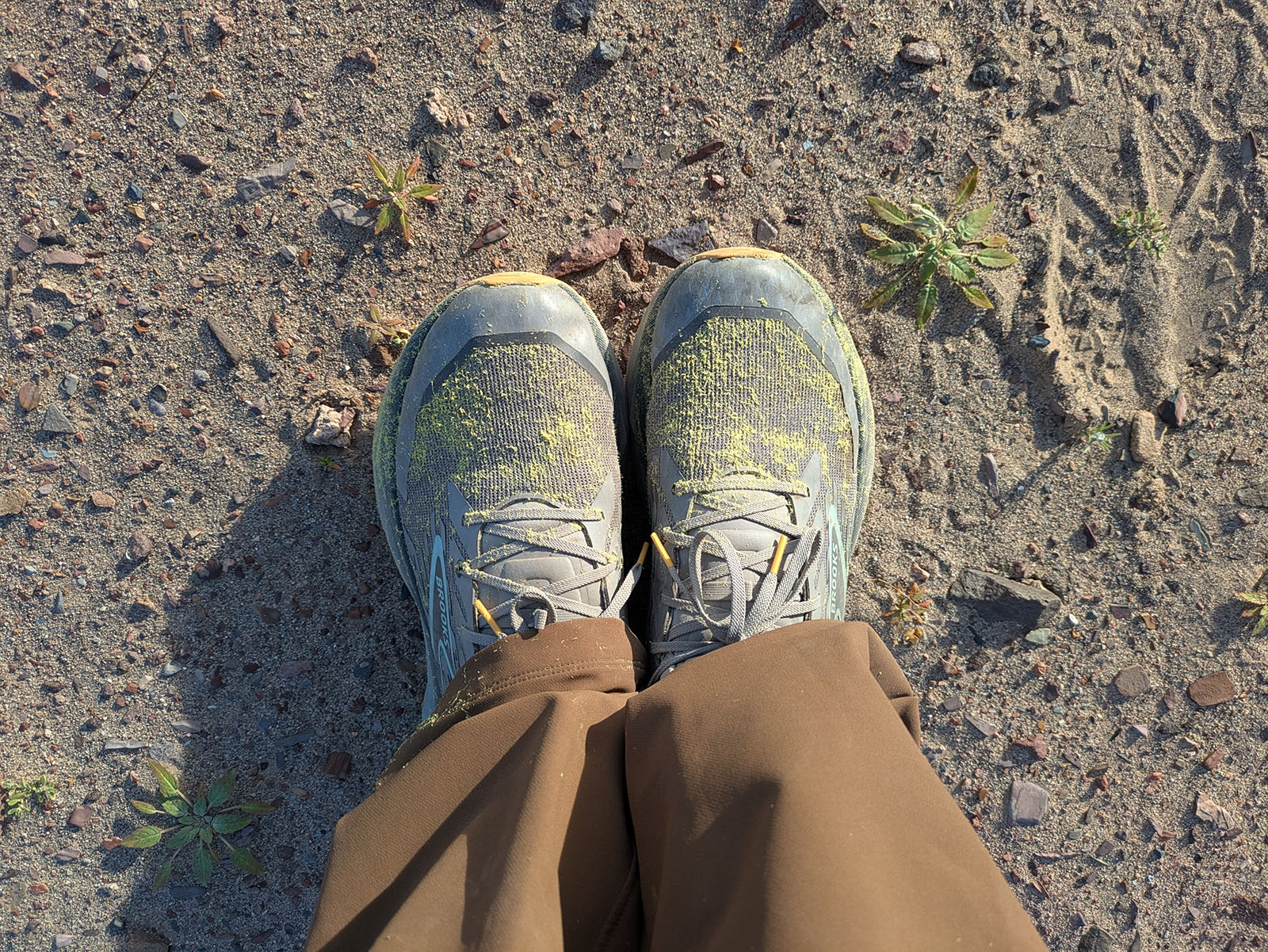
When we arrived at Ibex, the super bloom was in full swing there too. In fact the flowers were dripping in so much pollen, as we walked out to the dunes it became impossible to not be covered in pollen. We eventually found the old abandoned road that had significantly less flowers on it, but the pollen had been spread and our shoes were yellow.
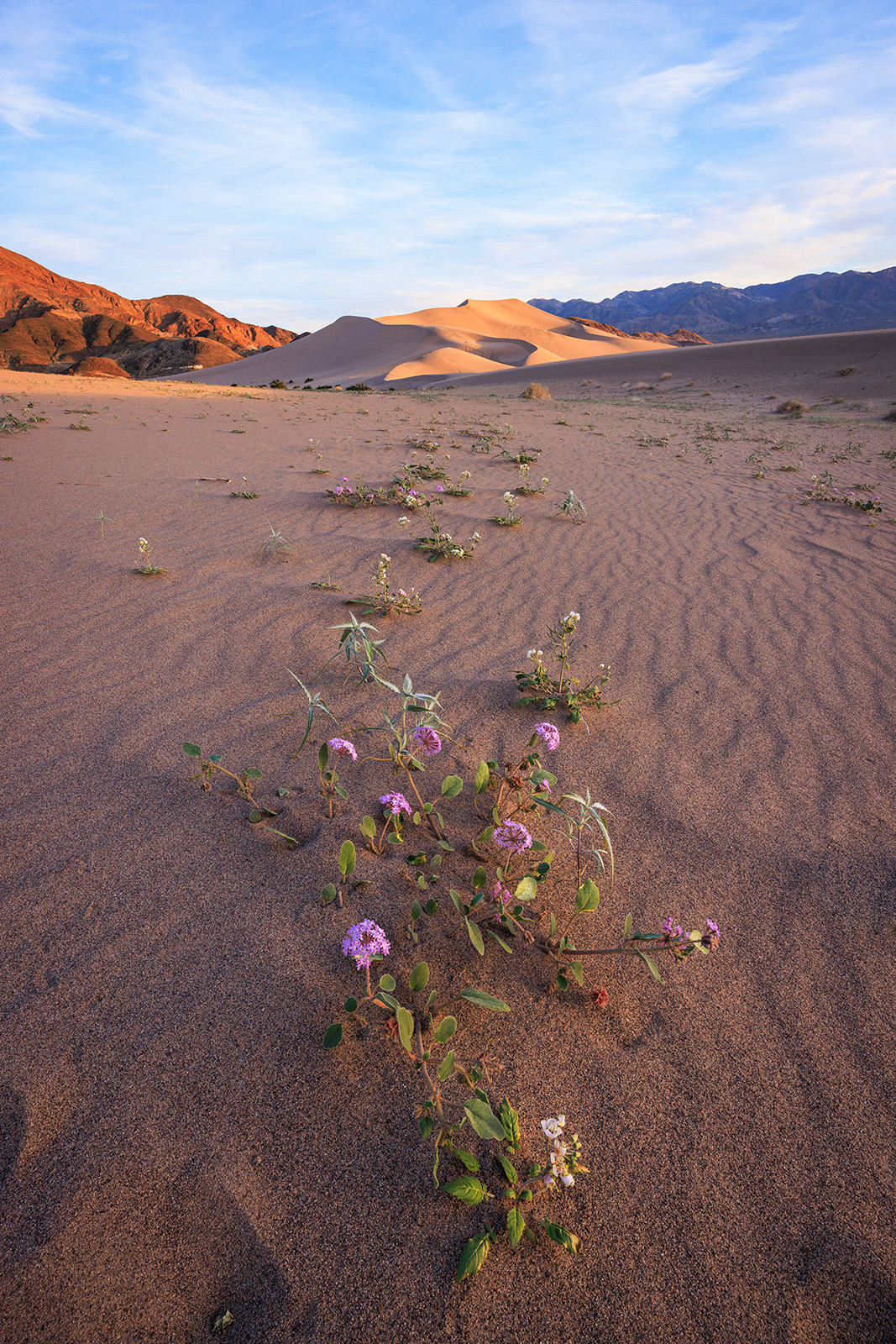
I didn't really know what to expect for Ibex Dunes. In fact none of us did, as we were all new to this dune field, but the flowers had spread onto the sand dunes and mother nature gave us a treat of an evening. I ended up focusing on the flowers, with one other guest joining me on that. The other guests focused more on the dunes with Murray. In the end I got one of my favorite images of the trip seen below.
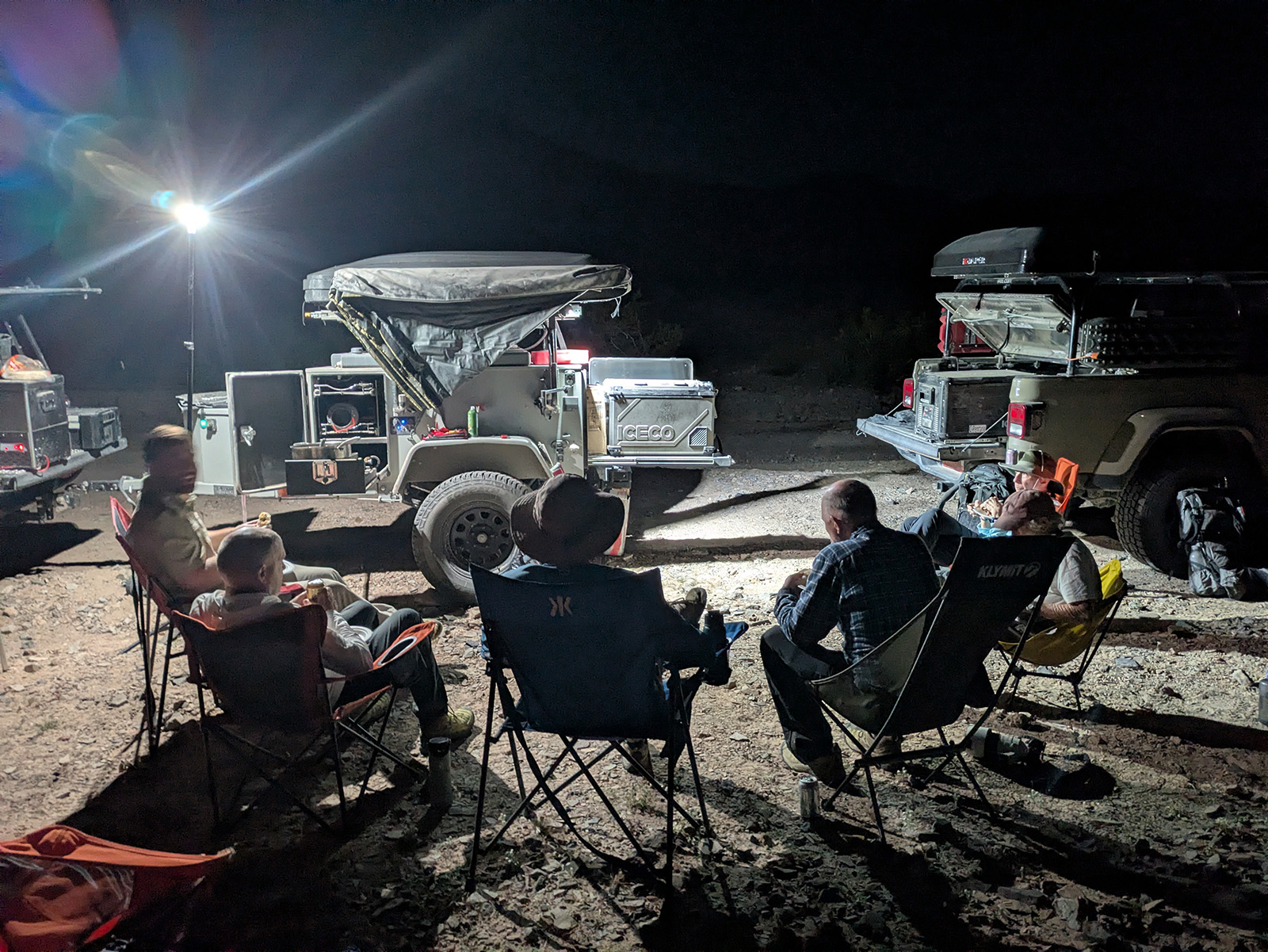
At the end of many of the nights, we ended up hanging around camp and enjoying some awesome food. For our final night we enjoyed some Fajitas. A perfect way to end off a southwest adventure.
Day 5- The Final Day
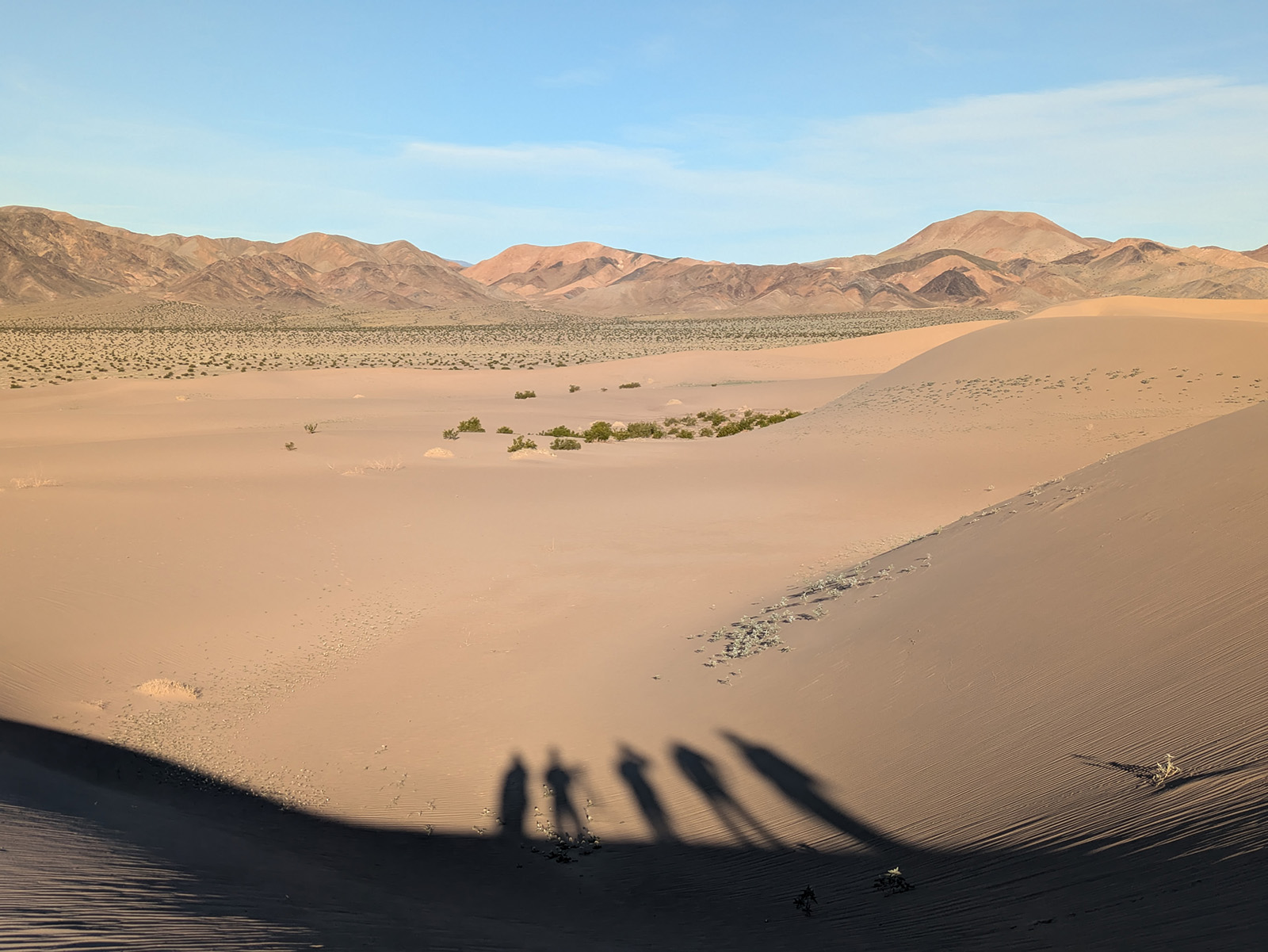
The final day turned out to be quite special. We headed back into the dunes one last time and were blessed with possibly the best abstract sand dune shots of the trip. They key was to go further into the dune field.
One of the lessons Murray and I really focused on while doing this photo trip was the need for focus stacking. Focus stacking becomes paramount while doing sand dunes with telephoto lenses. So after a week of training guests on the topic, we began to see the fruits of our labor come to fruition. Many of the guests were getting the concept down without us having to walk through it with them. It was awesome to see.
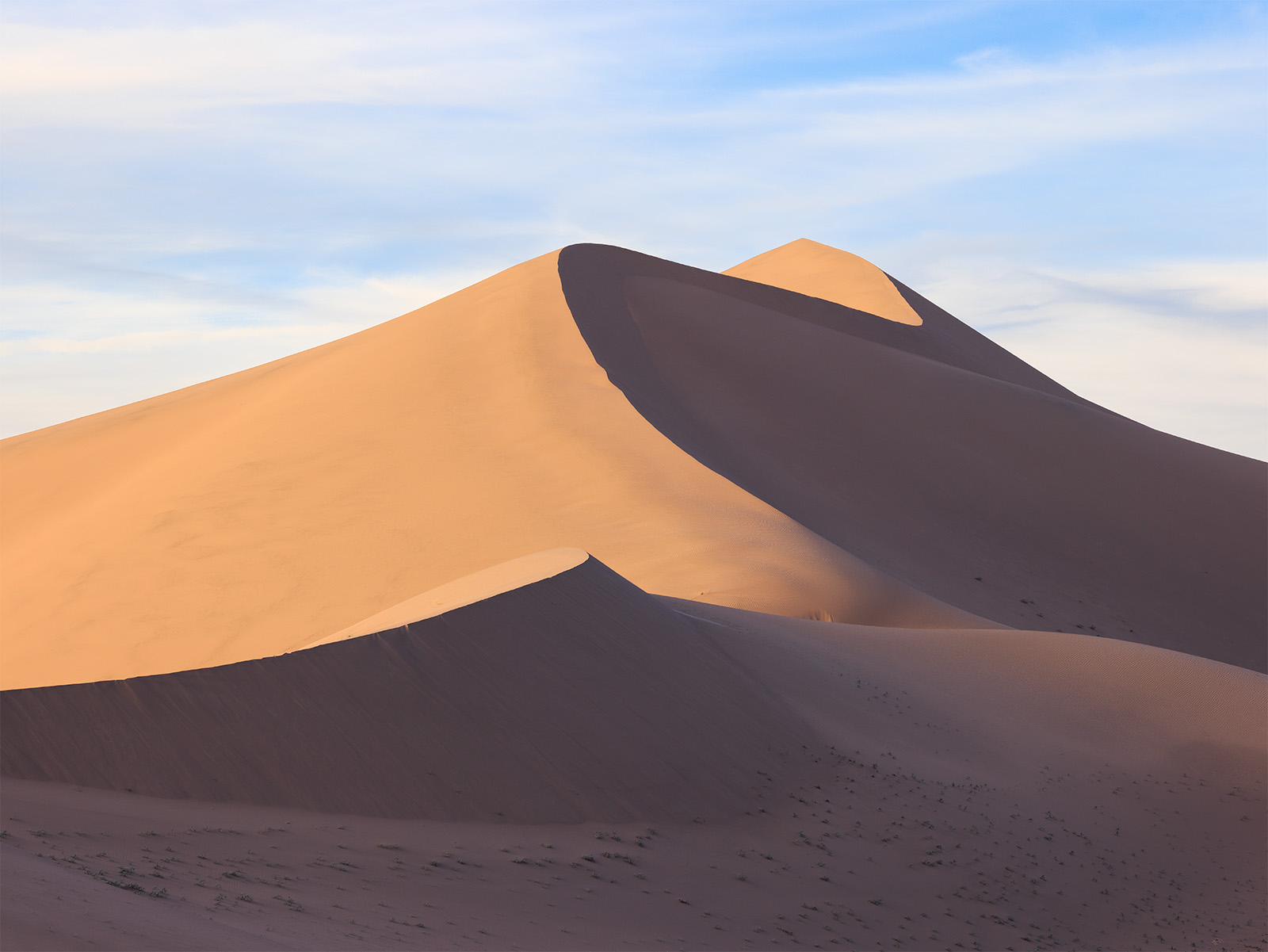
The end of the trip turned into a more exciting adventure than what we wanted as we had a major car malfunction, but we ended up getting everything resolved easy enough. We ended up with guests getting back to their vehicles about when we planned and overall everything turned out great.
You never quite know what you will get on a photography workshop. Blustery weather, overcast, sunny, or in this case, stunning clouds and a super bloom. That is part of the fun of these trips.
Stay Connected with News and Updates!
Join my mailing list to receive the latest news and updates from me. Choose the topic you are most interested in and I'll focus on sending you personalized content. Don't worry, your information will not be shared.
We hate SPAM. We will never sell your information, for any reason.
Author

I love writing almost as much as I love photography and hope that the posts and articles that I share through my blog will help you develop your photography skills further. Enjoy the read and remember to sign up to receive monthly news of the topics that interest you most.
